


Colombia Advances in the Development of Its Methane Emissions Mitigation Roadmap for the Hydrocarbon and Coal Sectors
OLACDE and Colombia’s Ministry of Mines and Energy held a technical workshop to define priorities and actions to reduce methane...
Read more
LAC have Advanced in Energy Access, but the Challenge Now Is Affordability, Service Quality, and Investment
OLACDE participated in the United Nations High-Level Dialogue on SDG 7, highlighting the importance of energy as a pillar for...
Read more
LAC Advance in Low-Emissions Hydrogen Certification to Access Global Markets
OLACDE held the webinar “Low-Emissions Hydrogen Certification: Latin America and the Caribbean’s Green Passport to Global Markets.”
Read more
LAC Advances in Renewables but Faces the Challenge of Electrifying Energy Consumption
OLACDE participated in the XIII Renewable Energy Conference Peru 2026, highlighting the progress and challenges of the regional energy transition
Read more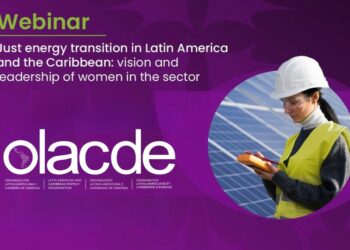
Women Leaders Driving a Just Energy Transition in Latin America and the Caribbean
Regional webinar highlighted the strategic role of women’s leadership in building more inclusive, sustainable and equitable energy systems.
Read more
Monthly Electricity Generation Report for Latin America and the Caribbean
Electricity generation in Latin America and the Caribbean reached 158 TWh, with a year-on-year growth of 3.3%.
Read more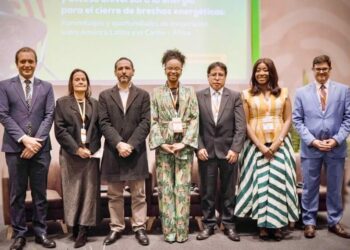
LAC and Africa strengthen cooperation on energy transition and universal access to energy
The CELAC–Africa High-Level Forum highlighted bi-regional cooperation as a key pillar.
Read more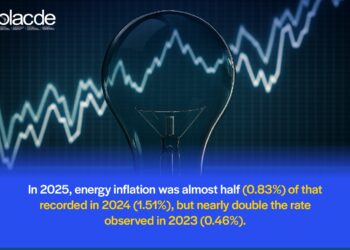
Energy Inflation Report for Latin America and the Caribbean
In 2025, energy inflation was almost half (0.83%) of that recorded in 2024 (1.51%), but nearly double that of 2023...
Read more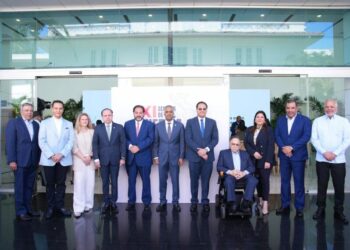
Dominican Republic to Host the 11th OLACDE Energy Week
The leading energy event in Latin America and the Caribbean will bring together authorities from 27 countries in Santo Domingo...
Read more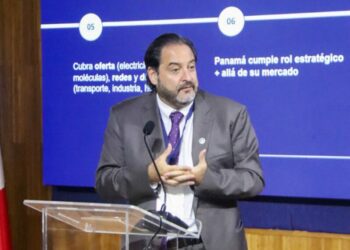
Panama launches participatory process to develop its National Energy Plan 2026–2040
Authorities, private sector, international organizations, and academia join a technical and participatory process that will define the country’s energy future.
Read more